Posts

Showing posts with the label yokai

Shussebora

Image
  The shussebora is a yokai from Japan. It is a mythical version of the triton conch snail. The name means promoted conch, because it was believed to transform into a dragon as it aged. Many monster in Japanese mythology, and regular animals too, were believed to transform into different, more powerful monsters when they reached a certain age. The triton conch would start out as a land snail living in mountain meadows, make its way down to the ocean and transform into a conch, then when it became a thousand years old it would transform again into a dragon with a conch shell. Many other animals in Japanese mythology also had complex transformations, such as bats, foxes and other more traditional dragons. So now you know what Pokemon evolutions were inspired by. The belief that the triton conch started its life high in the mountains was probably inspired by finding fossilized shells high in the mountain rocks, pushed up by tectonic lift. Before plate tectonics or the science b...

Ichimokuren

Image
   Ichimokuren is a local weather god from Mount Tado, Japan. He has many different forms, either a dragon with one glaring eye in the middle of his forehead, or one working eye and one destroyed eye. Or he can appear as a single eye peering out from the sky, or he can appear as a flying fireball. Ichimokuran is known for creating devastating storms, which are capable of knocking down buildings, capsizing boats and throwing people into the air. It was believed that when he left his home in mount Tado to cause stores then black clouds would form around the mountain. People built a shrine to Ichimokuren there to pacify him. His shrine was built with no doors so he could come and go as he pleased. In modern time Ichimokuren has appeared in many video games and animes, usually in his floating eye form. Sources https://yokai.com/ichimokuren/

Tsukumogami

Image
Tsukumogami are a type of yokai from Japan. These are ordinary objects that have gained souls through some means. Usually this happened because the object was very old. It was believed that after a 100 years an object would receive a soul, making it conscious and giving it the ability to transform into a being who could interact with the world. Usually these objects would continue to behave themselves and not show off these abilities if they continued to be used and cherished by their owners. It was very old objects that were thrown away or abandoned that would start turning into creatures and misbehaving. They could do anything from pulling silly and annoying pranks to being actual threats. When an old object was broken and had to be discarded a small ceremony was held by the household to appease its spirit, and old objects in working order were not thrown away if it could be avoided. Cherishing old objects was part of the concept of mottainai, the desire to not be wasteful. Anoth...

Hyakume

Image
  The hyakume is a yokai from Japan. It’s name means one hundred eyes. The hyakume is roughly human shaped, but made out of flabby flesh lumps. It had a hundred eyes poking out from under the flesh flaps all over its body. It’s also about the size of a fat human. The hyakume looks somewhat similar to the nuppeppo, which is another yokai made of flabby flesh roughly in the shape of a human. Although the nuppeppo doesn’t have any eyes. Hyakumes live in abandoned places, usually temples or large houses. They live alone and shy away from interacting with any other being. They also come out only at night as the sunlight hurts their eyes. Hyakumes are not aggressive and just want to be left alone. However they will defend their home from intruders and thieves. Each night the hyakume will remove one of its eyes and send it out to patrol its territory for intruders. The eye floats around on its own like a will-o-wisp fireball. If the eye spots anyone it will attach itself to the...

Kamikiri

Image
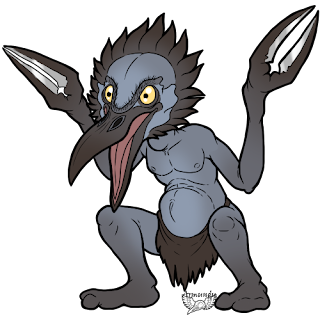
  Kamikiri is a yokai from the Edo period of Japan. It sits on the edge between legendary creature and cryptid, with newspaper articles about encounters with the creature coming out at the time, yet being treated as folklore now. Although the line between yokai and cryptid isn’t always clear. The kamikiri is a yokai who’s all about cutting off people’s hair. In previous eras in Japan long hair was a symbol of age and status. Both men and women had long hair, men wearing their hair in top knots and women in various styles. There was a much greater need to conform in Japan’s past, people wore hairstyles based on status and role in society, rather than for fashion. So having your hair cut off was far worse for the person that it would be in modern times. The kamikiri would lurk around its victim in secret and wait for a time they were alone to attack. They would then quickly and silently cut off the victim’s hair. Often the kamikiri would never be seen and the victim would only kn...

Ushi Oni

Image
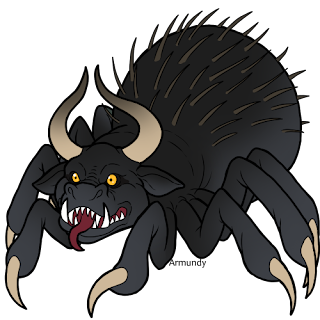
  The ushi oni is a monstrous yokai found in western Japan, usually along the coast or near rivers and waterfalls. The name mean ox demon. The most common depiction of the ushi oni is one with a bull's head and a spider's body. Although the spider part is just supposed to represent 'a form of demonic evil' and isn't inherently connected to spiders. However the name ushi oni refers to many local monsters with varying appearances. Ushi onis are cruel and violent monsters. They almost exclusively eat people. Occasionally they are said to attack live stock, but this is usually to lure people out. Ushi onis also breath out toxic gas and spread a variety of diseases. Ushi onis have a variety of behaviors and ways of hunting people. Some lay in wait in their layers and pounce upon unaware victims. These layers are usually along the coast in sea caves, as well as inland in dangerous river features such as whirlpools and waterfalls. Some rare ushi oni live far inland,...

Raiju

Image
  The raiju was a yokai from Japanese mythology that represented lightning strikes. It was once one of the most well known and feared yokais. Today it's lost much of its hold over the minds of people and is now confined to fantasy. Raijus were rarely seen and their appearance was highly variable from region to region. They could be any sort of predatory animal that occurred in Japan, such as wolves, weasels, cats, tanukies, and some animals which were not native, such as large jungle cats. The most common form Raijus took was that of a badger or civet. Some variations of the raiju were more fanciful, such as being a chimera of different animals, or having multiple limbs, such as having two tails or two sets of back legs. Regardless of appearance, raijus were always wrapped in lightning as they travelled to Earth. They had strong claws that could rip apart trees and tear holes in buildings. They could also set fire to anything they touched. Raijus were the pets of the storm god R...

Kamaitachi

Image
  Kamaitachi are invisible spirit weasels that ride whirlwinds and cut up victims in their path. It's debated whether the kamaitachi are invisible because they exist in the spirit world invisible to the human eye, or if they move so quickly they can't be perceived. Kamaitachi look like Japanese weasels but with sickle limbs and hedgehog like spikes on their back. Kamaitachi attack in threes. The first one slices the victim's legs and knocks them to the ground. The other slices up the victim, giving them thousands of cuts in a single second. The third applies a salve that heals the victim, ensuring none of the wounds are fatal. This leaves the victim knocked to the ground with scrapes and scratches but no serious injuries. It's said the kamaitachi do this to collect human blood, either to drink it or use it for magic. There are many region beliefs about the kamaitachi. In the Shin'etsu and Tohoku regions the kamaitachi take offence to people desecrating calendars. ...